
Frozen for Quality
Freezing is simply a change in temperature that helps keep food intact and preserve its quality. At its core, freezing is a physical process that slows spoilage and helps maintain nutrition, taste, and texture.
What Freezing Is
Freezing is one of the oldest forms of food preservation in human history. It predates refrigeration, canning, and modern industrial food processing.
Freezing lowers the temperature of food below 32°F, causing water that is naturally within the food to freeze. This slows microbial growth and enzymatic activity that can cause spoilage. In most cases, the only thing added in the preservation process is cold air.

How Foods Are Frozen
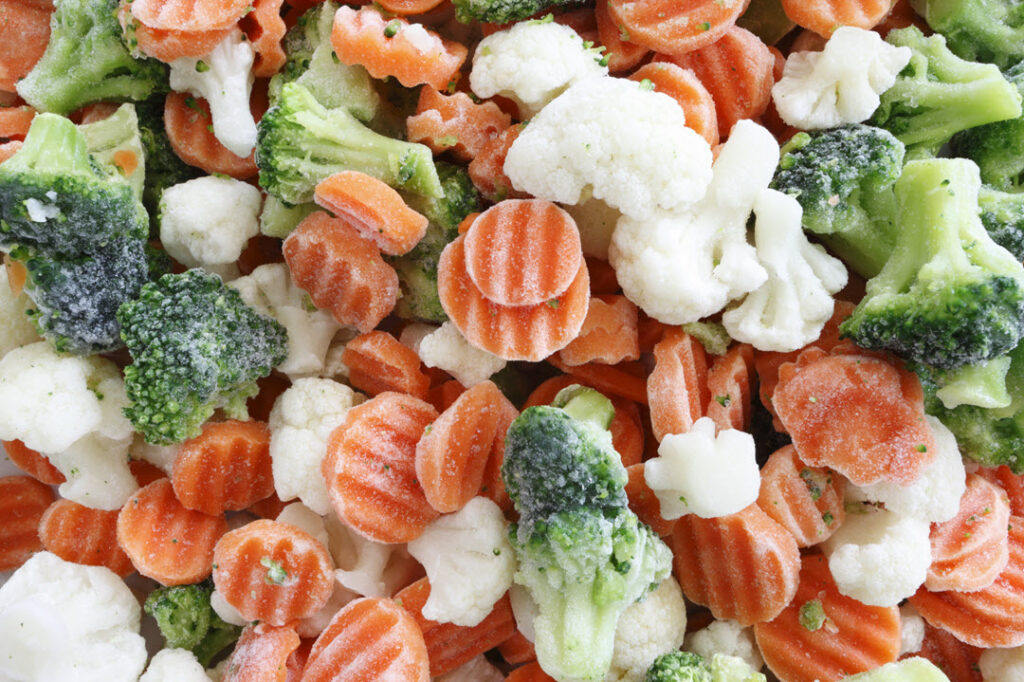
The most widely used commercial freezing method is Individually Quick Frozen technology, or IQF. Produce is harvested at peak ripeness, often just miles from the freezing facility. It is then washed, sorted, and inspected.
Some vegetables undergo blanching, just like you would do at home, to deactivate natural enzymes that would otherwise degrade color and texture during frozen storage.
The food is then spread individually on a conveyor belt in a blast freezer, where cold air circulates rapidly.
Each piece freezes within minutes, forming small, uniform ice crystals that help preserve cell structure and nutrients while minimizing texture loss. The frozen foods are then inspected, packaged, and stored at 0°F or below.
Why It Matters
Freezing locks in quality and convenience. It helps preserve foods people want to eat and feel good about serving, while reducing waste and making nutritious food more available in everyday life.